

Traditional Funeral Services Focused on Care and Respect
Traditional funeral services offer families a meaningful way to honor loved ones with dignity and respect.

When families search for funeral homes Pennsburg, PA, they want more than someone to coordinate arrangements. They want to know their loved one will be treated with dignity and that their family will receive thoughtful, compassionate guidance. Traditional funeral services provide a meaningful opportunity to honor a life, share memories, and gather with people who understand the significance of the loss. Knowing what these services involve can help families approach important decisions with greater confidence, even during an emotionally difficult time.
We understand that every family has different traditions, beliefs, and expectations surrounding a funeral. Some find comfort in familiar religious customs, while others prefer a ceremony centered on personal stories and meaningful relationships. At Falk Funeral Homes and Crematory, Inc., we take time to listen, explain available choices, and help families create respectful farewells that reflect the people they love. Our independent, family-operated approach emphasizes personal attention and thoughtful coordination, allowing relatives to focus on remembrance rather than feeling responsible for every detail of the arrangements.
Why Traditional Funeral Services Still Matter
A traditional funeral provides a structured opportunity for family and friends to gather, acknowledge a death, and honor someone's life. It commonly includes a visitation, funeral ceremony, and graveside gathering, although each element can be adapted to the family's wishes.
These gatherings create space for remembrance and connection. They also allow people to express sympathy, share stories, and support relatives who are experiencing a difficult loss.
The Comfort of Familiar Traditions
For many families, familiar customs bring a sense of continuity during an uncertain time. Religious readings, prayers, meaningful music, and longstanding family practices can provide a recognizable structure for saying goodbye.
We help families incorporate traditions that reflect their beliefs without assuming that everyone shares the same preferences.
A ceremony may be led by clergy, a celebrant, or another appropriate participant. Some families prefer a formal religious service, while others choose a gathering centered on stories, poetry, and personal reflection.
What matters is that the ceremony feels respectful and meaningful to those involved.
A Time for Family and Community
Funerals bring together people whose lives were connected to the person being remembered.
Relatives may reconnect, friends may share stories that family members have never heard, and neighbors may offer their support simply by attending.
We recognize that people express grief differently. Some appreciate conversation and shared memories, while others prefer quiet reflection.
A thoughtfully arranged funeral makes room for these differences. It gives guests an opportunity to participate in ways that feel comfortable while demonstrating care for the family.
Creating a Personal and Respectful Farewell
Personalization helps a traditional funeral reflect the individual rather than follow an identical format for every family.
We encourage relatives to consider the interests, values, accomplishments, and relationships that made their loved one unique. Even modest personal details can make a ceremony more meaningful.
Thoughtful Ways to Honor a Life
Families can personalize a traditional service through:
- Meaningful music: Favorite songs, hymns, or instrumental selections.
- Family photographs: Images representing important moments and relationships.
- Personal belongings: Appropriate keepsakes connected to hobbies, interests, or achievements.
- Tribute videos: Photographs arranged into a visual remembrance.
- Special readings: Scripture, poetry, letters, or meaningful passages.
- Shared memories: Personal reflections from relatives and friends.
We help families select elements that complement the service and respect their wishes.
Personal touches do not need to be elaborate. A favorite hymn, a meaningful photograph, or a few heartfelt words can communicate a great deal about someone's life.

Including Loved Ones in the Planning
Family participation can make funeral arrangements more meaningful, especially when several relatives want to contribute.
One person may enjoy selecting music, while another may prefer gathering photographs or preparing a reading. We encourage families to share responsibilities according to their comfort levels.
Thoughtful family involvement in planning can also help relatives communicate their preferences and understand one another's expectations.
When opinions differ, we guide conversations toward shared priorities and the wishes of the person being honored.
Not everyone needs an active role in the ceremony. Respecting someone's preference to participate quietly is equally important.
Understanding the Traditional Funeral Process
Traditional funeral arrangements generally involve several stages. Each serves a different purpose, and families can select the combination that best reflects their preferences.
We explain these choices before arrangements are finalized so relatives understand what to expect.
| Service element | What families can expect |
|---|---|
| Visitation | Time to gather, remember, and offer condolences |
| Funeral ceremony | Music, readings, prayers, and personal tributes |
| Graveside service | A final gathering at the cemetery |
| Memorial elements | Photographs, keepsakes, and meaningful displays |
Visitation and Funeral Ceremonies
A visitation gives family members and friends an opportunity to gather before the funeral ceremony. It may include photographs, tribute videos, or personal items that reflect the loved one's life.
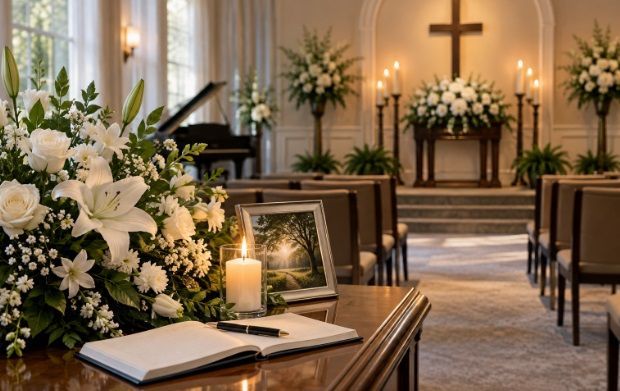
The funeral ceremony provides a more structured occasion for remembrance. Families may choose a chapel, church, or another appropriate venue.
Through our traditional funeral services, we help coordinate ceremony details, including the setting, music, readings, and participation of clergy or celebrants.
We also discuss the timing of gatherings and help relatives understand how the different elements fit together.
Graveside Services and Final Tributes
A graveside service generally takes place at the cemetery and may follow the funeral ceremony or serve as a smaller gathering.
Families may include prayers, readings, final remarks, or a period of quiet reflection.
We coordinate the appropriate arrangements with cemetery representatives and other participants.
Some families prefer an intimate graveside gathering attended by close relatives. Others invite everyone who participated in the funeral ceremony.
Neither approach is inherently more meaningful. The right choice depends on the family's traditions, preferences, and circumstances.
How We Guide Families Through Arrangements
Funeral planning involves practical decisions at a time when concentration and decision-making may feel especially difficult.
We believe clear communication and patient guidance are essential. Families should understand their options without feeling hurried or pressured into decisions.
What Happens During Funeral Planning?
Our planning process helps families address important arrangements in a manageable order.
- Initial conversation: We listen to immediate concerns and explain the first steps.
- Understanding preferences: We discuss known wishes, family traditions, and religious or cultural considerations.
- Selecting arrangements: We review visitation, ceremony, and graveside options.
- Choosing personal details: We discuss music, photographs, readings, and meaningful tributes.
- Coordinating participants: We work with clergy, celebrants, cemetery representatives, and other appropriate providers.
- Reviewing the service: We explain the planned sequence so family members know what to expect.
We understand that some people arrive with written instructions, while others have little guidance about their loved one's preferences.
When no instructions exist, we help families consider what they know about the individual's beliefs, personality, and relationships.
Respecting Every Family's Needs
Families may have different ideas about how a funeral should be conducted. Some prefer a formal ceremony, while others value simplicity and privacy.
We help relatives consider these differences while keeping the wishes and values of their loved one at the center of planning.
Compassionate service also means allowing time for questions and explaining unfamiliar terminology.
Our responsibility is to help families understand their choices and make decisions that feel appropriate for their circumstances.

Compassionate Support Beyond the Funeral
Funeral care does not necessarily end when the ceremony is complete. Families may still need practical information, emotional encouragement, and opportunities to remember their loved one.
We recognize that grief is individual. People experience loss differently, and there is no universal schedule for adjusting to the absence of someone important.
Resources for Families After a Loss
We provide access to grief support resources and aftercare information for families navigating the weeks and months following a funeral.
Our available support includes weekly grief messages and information about resources that may be helpful during bereavement.
These resources are intended to offer encouragement and guidance. They do not replace professional mental health support when someone needs specialized assistance.
We also help families preserve memories through options such as online memorials, where relatives and friends can share photographs, stories, and condolences.
Keeping Meaningful Memories Alive
Remembrance continues long after a funeral gathering.
Families may find comfort in sharing photographs, celebrating meaningful anniversaries, maintaining family traditions, or telling stories about the person they miss.
We believe these personal acts of remembrance deserve the same respect as formal ceremonies.
Our commitment to compassionate funeral care reflects the importance of supporting families throughout the experience, including after the service has ended.
A funeral mark an important occasion, but the relationships and memories it honors remain part of family life.
When comparing funeral homes Pennsburg, PA, families deserve a provider who listens carefully, respects personal traditions, and offers steady guidance throughout the planning process. At Falk Funeral Homes and Crematory, Inc., we understand that arranging a traditional funeral is about much more than organizing a ceremony. It is about recognizing a meaningful life and creating an opportunity for relatives and friends to gather with dignity. Whether your family is arranging services after a recent loss or discussing future preferences, we can explain visitation options, ceremony settings, graveside arrangements, and personalized tributes. We welcome your questions and will help you consider choices that reflect your loved one's wishes. For compassionate assistance with traditional funeral arrangements, call our Pennsburg team at (215) 679-5933 and speak with us about the next steps.